
Ground beef prices surged to new highs in June, reflecting ongoing challenges in the cattle industry and global trade dynamics. According to National Association of Farm Broadcasters report, prices are being driven up by a combination of domestic herd contraction and international import restrictions.
Latest USDA Data Shows Significant Year-Over-Year Increase
Recent government data highlights the magnitude of the price increase. The average cost of a pound of 100% ground beef reached $6.12 in June—marking a 12% increase compared to the same month in 2024. This figure also represents a steady monthly rise, up from $5.98 in May and $5.47 in June 2023.
Supply Constraints and Trade Barriers Fuel the Rise
Industry analysts point to two major contributors behind the escalating prices: a shrinking national cattle herd and restrictive beef import policies. As cattle supplies dwindle due to prolonged droughts, high input costs, and producer attrition, supply chain stress continues to mount. Simultaneously, trade limitations are limiting the ability to supplement domestic supply with imported beef, further tightening availability.
Outlook: No Immediate Relief in Sight
Experts warn the price momentum may persist well beyond 2025. Forecasts suggest sustained upward pressure on beef prices into 2026 and possibly longer, especially if herd rebuilding remains slow and global trade tensions persist. Consumers and retailers alike should brace for continued high costs in the meat aisle.
By Dale Sandlin with Southeast AgNet | southeastagnet.com
Latest USDA Reports Cattle Prices will Continue to Climb
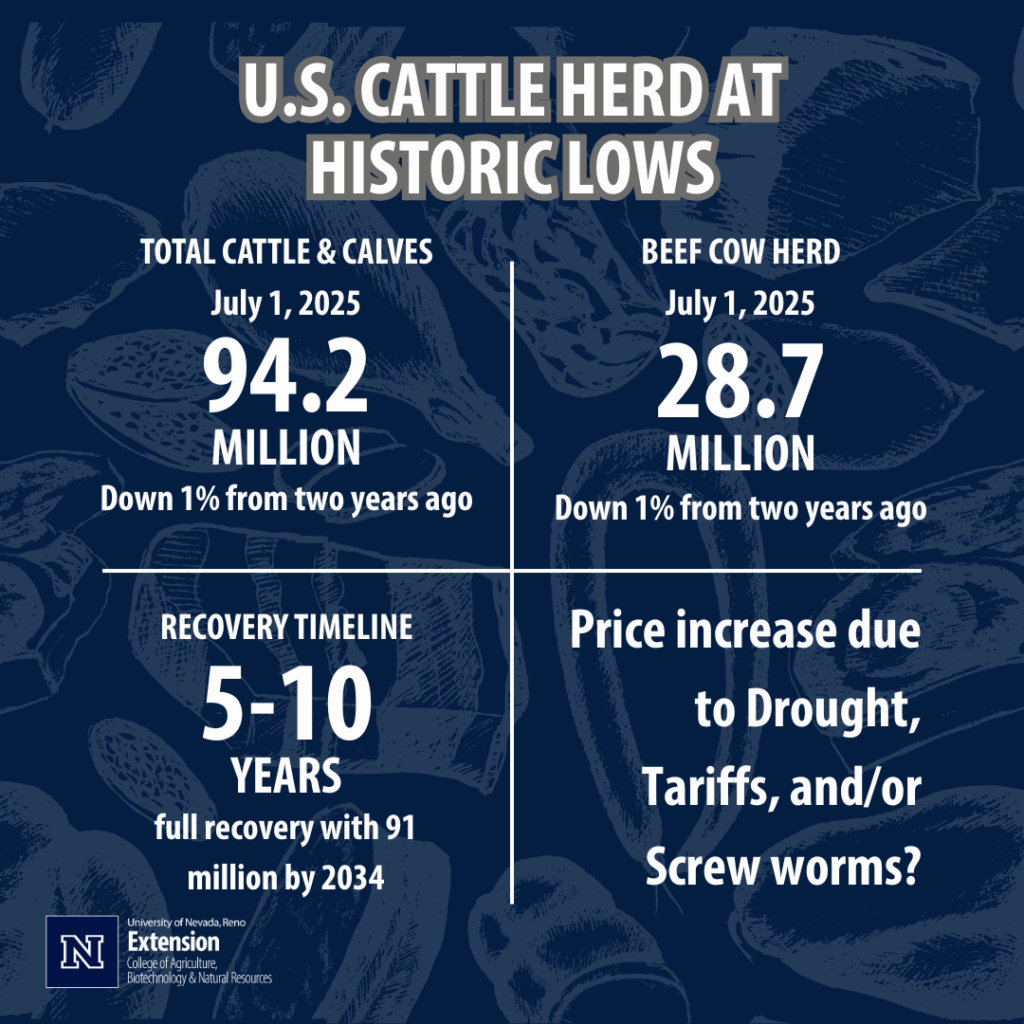
USDA’s Cattle Inventory Report showed the smallest U.S. herd in history and a smaller calf crop, and confirmed continued tightening numbers on feed.
With the release of the Cattle on Feed report and Cattle Inventory Report on Friday, data shows the nation’s cattle herd is still not expanding and feedlot placements continue to decline.
The exciting news for cattle producers is that based on the reports, Don Close, Terrain senior animal protein analyst, predicts cattle producers have not seen the highest cattle prices, yet.
“While I don’t think we’ve seen the high water mark of this market, I do not think we’ll continue to see prices escalate at the rate we have for the year to date,” he says.
Cattle on Feed Shows Bullish Placements
The on-feed total was 11.1 million head, down 1.6% from a year ago, the lowest in eight years. Placements were down 8%, the lowest in 16 years.
Derrell Peel, Oklahoma State University Extension livestock marketing specialist, says, “The placements came in substantially less than expected and as a result of that, it did change the on-feed number to about half a percent less than expected.”
Close adds, “If you look at the decline in placements, specifically Texas, and those Southern feeding states, and the implications we’re getting because of the border closure, to me, that’s the real story in the long-term ramifications to the market.”
He says the state-by-state breakdown confirms Texas placements down 18% compared to last year, Oklahoma down 27% while Iowa is up 21%.
“I think that’s going to have a big impact on the north to south price spread that has been such a big issue in the market through 2025 year to date,” he explains.
Kenny Burdine, University of Kentucky livestock agriculture economist, says: “The surprise of this quarterly Cattle on Feed report was June placements, which were down 8% from 2024 and outside the range of expectations. Marketings continue to suggest we may be pulling cattle ahead, but placements suggest we are not replenishing them at the same pace.”
Heifers, as a percentage of on-feed inventory, came in at 38.1%. This is about a percent and a half lower than July 1, 2024, but up about half a percent from April of this year.
“Much like the beef replacement heifer estimate from the inventory report, this does not suggest much retention is occurring,” Burdine says. “Any growth in beef cow numbers is coming from reduced cow slaughter.”
Cattle Inventory Down 1% from 2023
The cattle inventory report was compared to 2023 since last July’s report was cut. Close says it shows the smallest herd on record, with all cattle and calves down 1% at 94.2 million head.
He says the calf crop at 33.1 million is the biggest market signal.
“The real critical number is the calf crop number,” Close says. “That was down 1% so it still shows, you know, we’re going to see additional limits on the available number of potential placement or available cattle outside of the feedyard, again in 2026.
Following the release of the reports, seven university agriculture economists shared their perspectives after reviewing the data. To read their opinions, view the full article here: https://www.drovers.com/markets/market-reports/cattle-prices-predicted-continue-climbing-breaking-down-latest-inventory-r
By Angie Stump Denton & Michelle Rook | Drovers.com